Stop Drifting: 7 Planners That Give Retirees Real Structure in 2026
I spent the first six months of my retirement drifting. I’d wake up, make coffee, scroll through the news, and then… stare at the ceiling. My calendar was empty. My days blurred together. The retirement fantasy—endless free time—turned into something I didn’t expect: a quiet, creeping boredom that made me feel untethered. It wasn't until I bought a planner designed for this phase of life that I started feeling like I had a purpose again. After testing more than a dozen options, here are the seven planners that gave me—and other retirees I've talked to—real structure in 2026.
Why Retirees Need Structure—and Why Most Planners Fail Them
When you leave the workforce, you lose the external structure that told you where to be and when. For decades, your calendar was set by meetings, deadlines, and commutes. Then suddenly, it’s wide open. The American Psychological Association has noted that retirement can trigger a loss of identity and purpose, especially without a daily rhythm (source).
Most planners are built for busy professionals—hourly time blocks, task lists that assume you have deliverables. But retirees don’t need to pack their day; they need to shape it. A planner that forces you into 30-minute slots feels like a second job. The best planners for retirees who want structured free time offer flexibility: space for reflection, habit tracking, and a gentle nudge toward meaningful activities, not just errands.
I tried a standard undated bullet journal first. It was too open-ended. Without prompts, I ended up writing lists of chores. I tried a digital app, but the constant notifications felt like work. What finally clicked was a planner that gave me a loose scaffold—enough structure to avoid drift, but not so much that it felt like a boss.
7 Planners That Give Retirees Real Structure in 2026
I tested each of these for at least two weeks. Here’s what worked, what didn’t, and who each one is for.
1. The Full Focus Planner—Best for Goal-Oriented Retirees
Who it’s for: Retirees who still want to set quarterly goals and track progress toward something meaningful—like writing a memoir, learning a language, or volunteering consistently.
Unique feature: The “Big 3” daily focus slots. You pick three priorities each day, not ten. That forced me to stop trying to do everything and actually finish something.
Drawback: It’s goal-heavy. If you just want to track appointments and jot down gratitude, this feels like overkill. Also, the layout is weekly, not daily, which some retirees find cramped.
I used this for a month when I was trying to build a morning exercise habit. The weekly review—where you ask “What went well? What could change?”—was surprisingly helpful. It made me notice that I skipped walks on days I had late-morning appointments, so I started scheduling walks earlier.
2. The Panda Planner—Best for Habit-Building
Who it’s for: Retirees who want to track daily habits (walk, call a friend, read) without feeling pressured to be productive.
Unique feature: A daily happiness score and a “3 Wins” section. It sounds cheesy, but writing down three small wins each day—like “made a good cup of coffee” or “finished a chapter of that novel”—shifted my perspective from what I hadn’t done to what I had.
Drawback: The habit tracker only has room for six habits. If you’re tracking more than that, you’ll need to supplement with a separate log.
This is the planner I recommend to anyone who feels like their days are empty. The structure comes from the reflection prompts, not the schedule. It’s gentle.
3. The Passion Planner—Best for Creative Retirees
Who it’s for: Retirees who want to explore new hobbies, travel, or start a side project. It has space for mind maps and doodles.
Unique feature: A monthly “roadmap” where you break a big goal into small steps. I used it to plan a two-week road trip—mapped out routes, campsites, and rest days—and the visual layout made it feel achievable, not overwhelming.
Drawback: The layout is busy. Some pages have too many boxes, which can feel chaotic if you prefer clean lines.
4. The Day Designer—Best for Appointment-Heavy Weeks
Who it’s for: Retirees with frequent medical appointments, volunteer shifts, or social commitments.
Unique feature: A vertical hourly timeline from 6 a.m. to 9 p.m., plus a “Today’s Top 3” section. The timeline is flexible—you don’t have to fill every slot. But when you have a 10 a.m. doctor’s visit and a 2 p.m. bridge game, it keeps you from double-booking.
Drawback: The hourly grid can feel intimidating if your day is mostly open. I found myself writing “read from 11–12” just to fill space, which felt counterproductive.
5. The Clear Habit Journal—Best for Low-Vision Retirees
Who it’s for: Retirees who need large print, high contrast, and a simple layout.
Unique feature: Cream-colored paper with a dot grid that’s easy on the eyes, and a minimal design—just a daily log and a monthly tracker. No tiny boxes.
Drawback: It’s essentially a notebook with prompts. No hourly schedule, no weekly review. If you need more structure, this might feel too loose.
I gifted this to my aunt, who has macular degeneration. She said it was the first planner she could actually use without squinting.
6. The Legend Planner—Best for Couples Sharing a Schedule
Who it’s for: Retired partners who want to coordinate activities without stepping on each other’s toes.
Unique feature: A two-page weekly spread with a shared “family” column and individual space for each partner. My husband and I used it to plan our weekly walks, grocery runs, and quiet afternoons. It cut our “what are we doing today?” arguments by half.
Drawback: It’s larger than most (A4 size), so it doesn’t fit in a purse. And if one partner isn’t into planning, the empty column can feel judgmental.
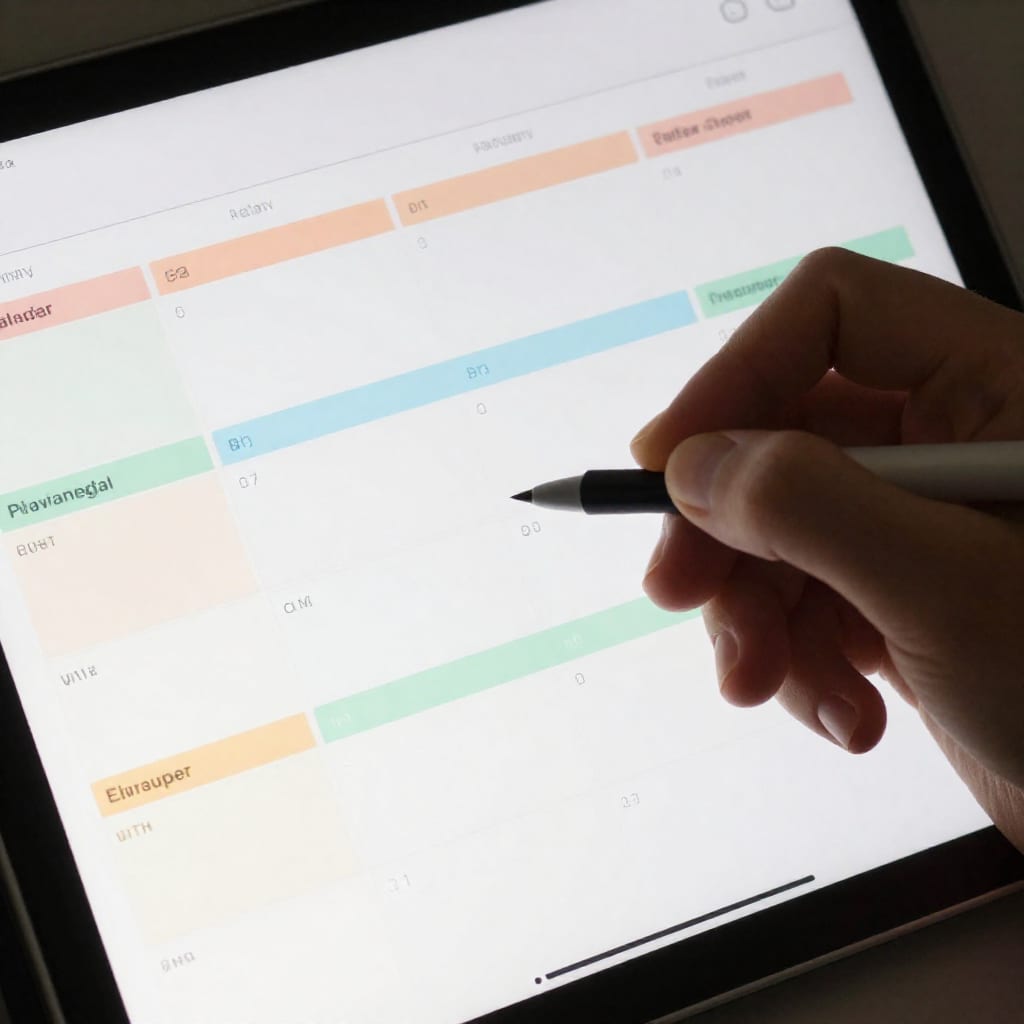
7. The Digital Planner (GoodNotes/Remarkable)—Best for Tech-Savvy Retirees
Who it’s for: Retirees comfortable with tablets who want searchable notes, reminders, and the ability to sync across devices.
Unique feature: You can copy and paste recurring tasks (like “take medication” or “water plants”) without rewriting them. The Remarkable tablet feels like paper, so you avoid screen fatigue.
Drawback: Steep learning curve. I spent a whole afternoon setting up templates. And if the battery dies (the Remarkable lasts about two weeks), you’re stuck until you charge it.
If you travel a lot, the digital option is a lifesaver. I have a friend who RV’s across the country, and she uses a digital planner synced to her phone and tablet. She never loses her schedule.
How to Pick the Right Planner for Your Retirement Style
Here’s a simple checklist I use when helping friends decide. Ask yourself these three questions:
- Do you want daily or weekly layout? Daily gives more room for reflection; weekly gives a bird’s-eye view. If you have many appointments, go weekly. If you’re building habits, go daily.
- Paper or digital? Paper is tactile and never glitches. Digital is searchable and portable. If you hate charging things, paper wins. If you want reminders and easy editing, go digital. The National Institute on Aging recommends activities that reduce cognitive load (source), and for some retirees, a paper planner does exactly that—no notifications, no battery anxiety.
- What’s the focus? Appointments? Goals? Gratitude? A planner that tracks all three might be too complex. Pick one primary function. You can always add a small notebook for the rest.
I’d also recommend testing a planner for one full week before committing. Most companies offer return windows, and you’ll know by day three if the layout feels like freedom or a cage.
Beyond the Planner: Small Habits That Make Structure Stick
A planner is just a tool. What actually stopped my drifting was building two small habits:
- An anchor activity every morning. For me, it’s a 15-minute walk before breakfast. No exceptions. That single act tells my brain “day has started.” For you, it might be stretching, writing in a journal, or watering plants. Pick one thing that happens at roughly the same time every day.
- A 5-minute Sunday review. Every Sunday evening, I look at the week ahead and ask: “What’s one thing I want to feel at the end of this week?” Then I schedule one activity that supports that feeling. It’s not about filling every slot; it’s about creating a small, intentional shape for the week.
The “3 Wins” log—which I borrowed from the Panda Planner—has been a game-changer. I write three small victories each night, even if it’s “didn’t lose my keys.” It retrains your brain to notice progress, not emptiness.
If you’re retired and feeling the drift, I’d also recommend checking out best daily routine for retired couples if you’re sharing time with a partner, or time blocking tips for empty nesters if you’re adjusting to a quieter home. For those who struggle with planning layouts, planner layouts for seniors with low vision offers specific recommendations. And if boredom is the main issue, how to avoid retirement boredom with a weekly schedule gives you a concrete template.

Practical Takeaway
The best planner for your retirement isn’t the one with the most features—it’s the one you’ll actually use. Start simple. Pick a layout that matches your energy, not your ambition. If you’re new to planning, go with the Panda Planner or the Clear Habit Journal. If you have a full calendar, the Day Designer or Legend Planner. And remember: the goal isn’t to fill your time—it’s to shape it so you don’t wake up six months later wondering where it went.
Frequently Asked Questions
What’s the biggest mistake retirees make when choosing a planner?
Buying a complex planner made for professionals. Retirees often need simpler layouts that prioritize flexibility and reflection, not rigid hourly slots.
Can a digital planner work as well as a paper one for a retired person?
Yes, if the retiree is comfortable with tablets. Digital planners excel at reminders and search, but paper offers tactile satisfaction and no screen fatigue. It’s personal.
How much time should I spend planning each day in retirement?
About 10–15 minutes in the morning and 5 minutes at night. Over-planning can feel like work; the goal is gentle structure, not a second job.
I have health appointments and volunteer shifts—what planner feature should I prioritize?
A weekly spread with a clear ‘appointments’ column and a separate notes section for medication or instructions. Some planners include health log pages designed for seniors.
Do these planners work for someone who travels frequently in retirement?
Yes—look for lightweight, spiral-bound options (paper) or a digital planner synced across devices. Compact layouts with a monthly overview are best for on-the-go life.